
Question: Two cups of lemon balm tea, but they’re different colors! Sourced from the same place, steeped for the same amount of time. There’s only one difference! What is it this time?
Scroll to the bottom for the answer.
Respiratory Resilience
A four-session virtual class on herbal support for lung health during wildfires and other mass air pollution events.
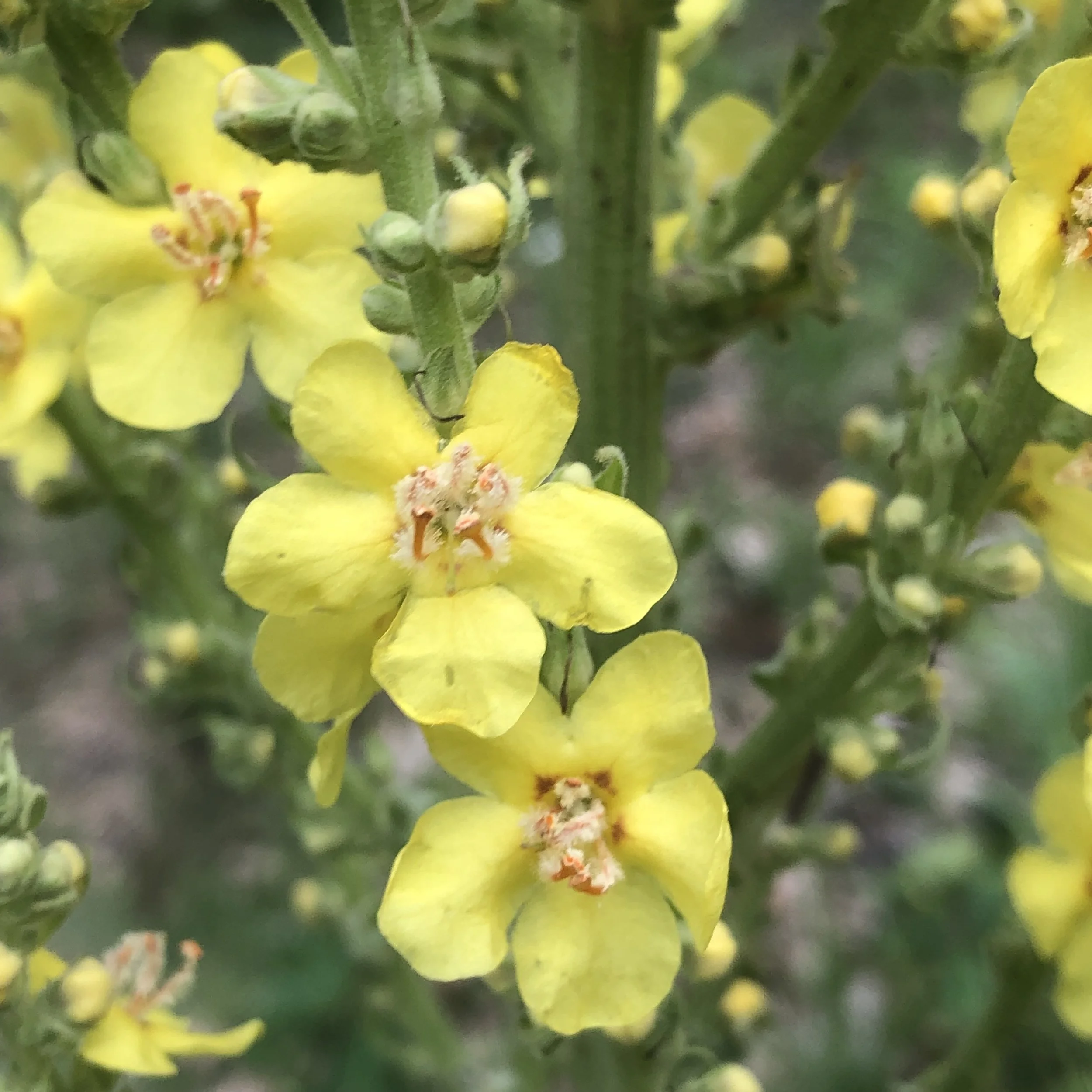
For accessibility information, please visit the course registration page.
Capitalist climate disaster is quite literally the air we breathe. As we all live through exposure to wildfire smoke and other air pollutants, how can we support one another in lung health?
Respiratory Resilience is a four-session virtual class on holistic support for the respiratory system with a focus on responding to poor air quality due to wildfire smoke. Class will be held on Mondays, 6pm - 8pm CST, September 21st, September 28th, October 5th, and October 12th. A portion of the proceeds from this class will go towards The Climate Mobilization, which provides peer-led support for BIPOC youth-led climate resilience projects.
Respiratory Resilience is a four-session virtual class on holistic support for the respiratory system with a focus on responding to poor air quality due to wildfire smoke. Class is Mondays, 6pm - 8pm CST, September 21st, September 28th, October 5th, and October 12th. Class is offered on a sliding scale. If you need a sliding scale price lower than the prices listed, please contact me to see if this is possible. Payment plans are available upon request. A portion of the proceeds from this class will go towards The Climate Mobilization, which provides peer-led support for BIPOC youth-led climate resilience projects.
For more details on Respiratory Resilience, click here.
Foundations of Herbalism
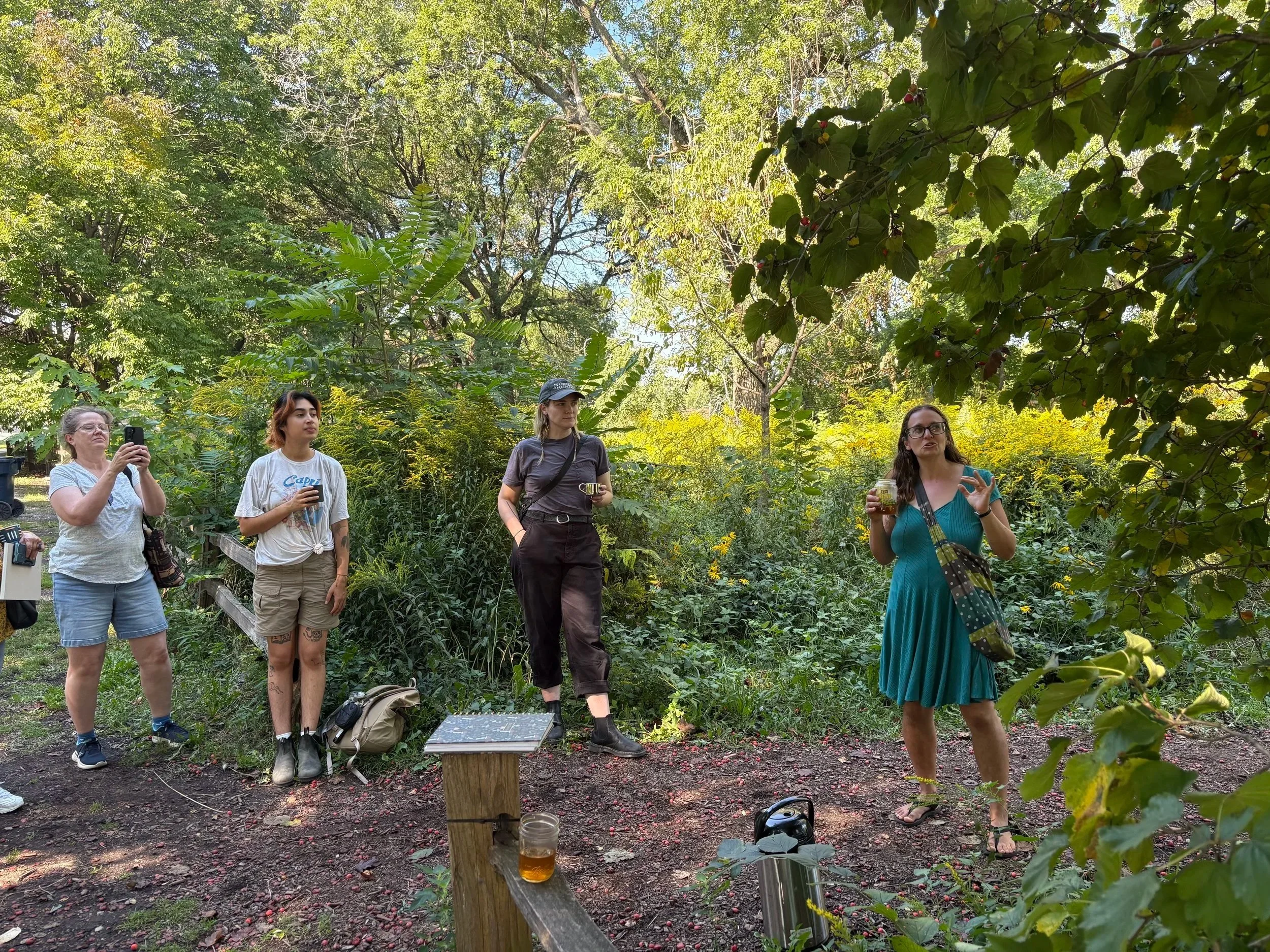
A four-week class to deepen your relationship with plant medicine. Sundays September 27th through October 18th.
For accessibility information, please visit the course registration page.
Gain an in-depth understanding of the medicinal properties of several herbs for common ailments
Learn the basics of medicine making: Make your own herbal teas, tinctures, vinegars, and syrups
Get to know the plants growing around us
A four-week class to deepen your relationship with plant medicine. Sundays, 2:30pm - 5:30pm, at Horner Park, Sept 27th through Oct 18th. There are a limited number of sliding scale spots. If you need a sliding scale price lower than the prices listed, please contact me to see if there are additional sliding scale slots available. Payment plans are available upon request.
So much packed into 4 weeks. 100% worth it. . . . I can’t wait to put what I’ve learned into my daily life!
-Past student
For more details on Foundations of Herbalism, click here.
A four-week class to deepen your relationship with plant medicine. Sundays, 2:30pm - 5:30pm, at Horner Park, Sept 27th through Oct 18th. There are a limited number of sliding scale spots. If you need a sliding scale price lower than the prices listed, please contact me to see if there are additional sliding scale slots available. Payment plans are available upon request.
Question: Two cups of lemon balm tea, but they’re different colors! Sourced from the same place, steeped for the same amount of time. There’s only one difference! What is it this time?
Answer: Whole dried herb versus cut and sifted herb. The tea on the left I used dried whole lemon balm leaves, without crushing or processing them at all. The tea on the right, I crushed up the dried leaves into smaller bits. This means more surface area was exposed and the water could extract more of the medicine.
In almost all cases with herbal preparations, you want to maximize the surface area of your herb so that the medicinal properties can extract most effectively.